
Solution 1: Green Energy + “Chain Leader” Initiative: Driving low-carbon transformation in the steel industry
Applicants: State Grid Changshu Power Supply Company & Jiangsu Longteng Special Steel Group
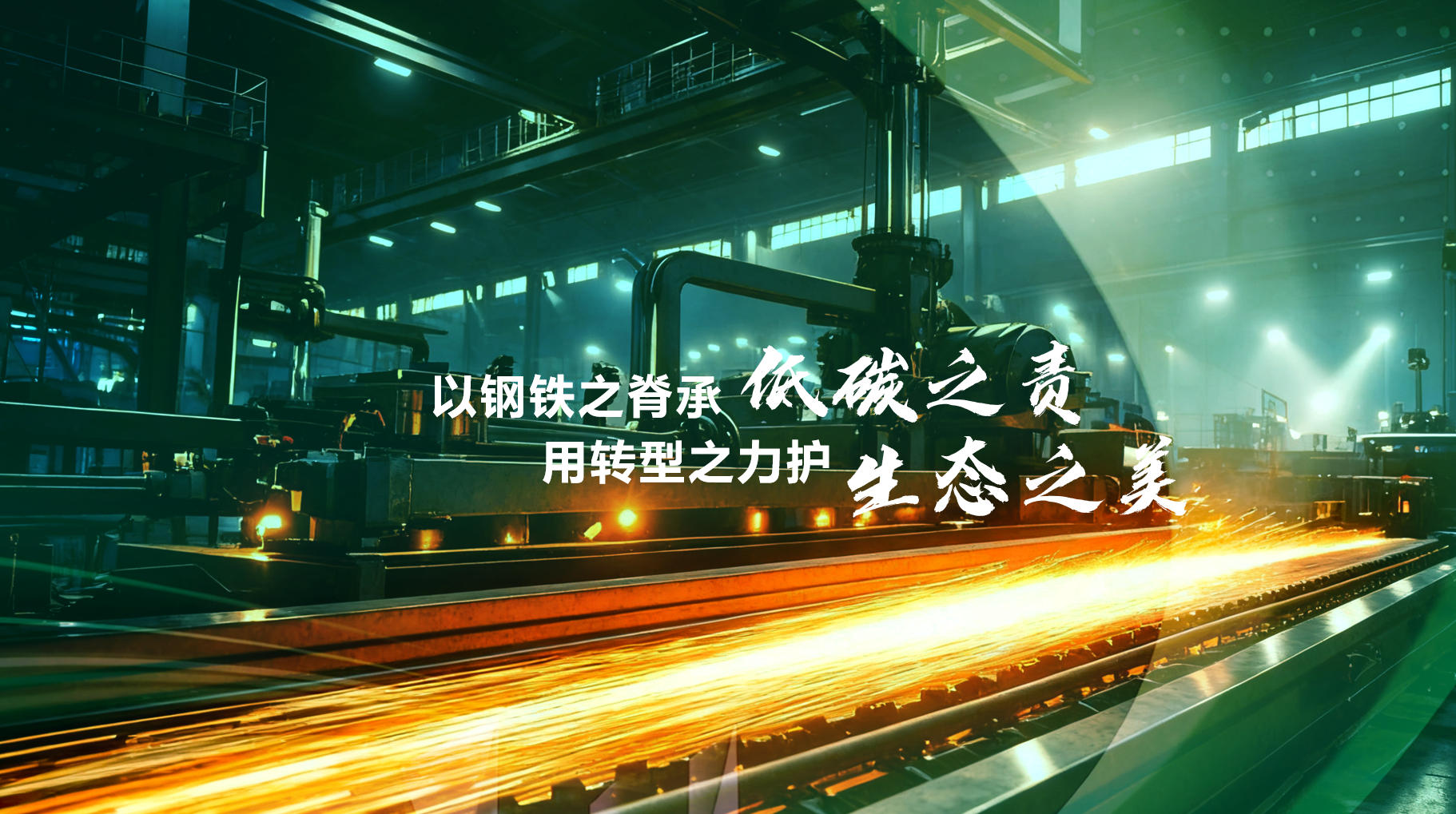
Abstract: Carbon “dual control” in the steel industry is a key goal for China’s 15th Five-Year Plan(2026-2030), with challenges including underdeveloped decarbonization technologies, inefficient renewable energy use, weak industrial chain coordination, and immature business models. State Grid Changshu and Longteng Special Steel Group collaborated on manufacturing and energy innovation to optimize production decarbonization and implement smart energy management. As chain leaders, they drove chain-wide carbon reduction through a “Low-Carbon Alliance” business model, injecting new momentum into the steel industry’s low-carbon transition.
Challenge
Steel powers the modern world — but it also heats it up. The industry accounts for 15-16% of China's total carbon emissions, making it one of the most carbon-intensive sectors in manufacturing. Under the country's dual carbon goals, large steel enterprises face four stubborn obstacles:
• Decarbonizing production is hard. Revolutionary carbon-cutting technologies remain elusive, and retrofitting existing facilities demands enormous capital investment.
• Green energy integration is weak. Renewables and production demand are poorly matched — the grid cannot always deliver power when factories need it most.
• Supply chain coordination falls short. Upstream and downstream partners operate in silos, leaving significant carbon-reduction potential on the table.
• Low-carbon business models are unproven. Without viable revenue streams, the financial backbone for transformation is missing.
Solution
Smart Carbon Reduction Through Electrification
State Grid Changshu partnered with Longteng Special Steel to launch the "Steel Low-Carbon Alliance" — a model for green, intelligent transformation. The centerpiece: the world's first 60MW subcritical gas power generation system, paired with an electric arc furnace running on 100% scrap steel. The result? Energy consumption per ton of steel dropped by 78.6%.
On the factory floor, logistics went electric. A network of electric pipe conveyors replaced diesel trucks — cutting transport emissions to zero across the entire site. Waste heat, pressure, and gas that once vented into the atmosphere are now captured and converted into electricity through co-generation units.
Solar-Storage-Charging: The Smart Energy Ecosystem
Longteng built China's largest curved building-integrated photovoltaic (BIPV) project — turning rooftops and facades into power plants. A 20MW/40MWh user-side energy storage system was added to the mix. Together with a microgrid management system coordinating electricity, heat, pressure, gas, and light, the site now achieves 99.72% local renewable energy absorption.
The Ecosystem Play: Engaging the Value Chain
Beyond its own operations, Longteng pushed its supply chain forward. Raw material suppliers received support for upgrading to cleaner production lines. Its welding wire production line became a "dark factory" — fully automated with energy consumption cut by 30%. Partnerships with Peking University and other institutions drove development of ultra-low-temperature forged steel ingots, extending product lifespan and locking in carbon savings for decades.
Innovation for Scale: A New Business Model
Government subsidies funded early pilots. University labs ran proof-of-concept trials. Carbon assets served as collateral for financing. The result is a self-sustaining "R&D → Pilot → Scale" loop that keeps all partners invested — and profitable.
Impact & Value
Environmental: The microgrid absorbs over 45.08 million kWh of renewable energy annually, avoiding 980,000 tonnes of CO₂ every year. Pollution metrics have plummeted: particulate matter down 25.5%, sulfur dioxide down 32.1%, nitrogen oxides down 56.8% — transforming air quality across the entire region.
Economic: Annual energy cost savings from solar storage and market trading reach approximately ¥12.5 million. New energy partners share an estimated ¥1.9 million in additional profits annually. The storage project alone generates over ¥48 million in revenue each year. Overall energy costs have dropped by more than 30%, strengthening Longteng's competitiveness in global export markets.
Industrial: Longteng Special Steel is among the first batch of Jiangsu Province enterprises to achieve full-process ultra-low emissions. It has been recognized as a "National Carbon Peak Leading Enterprise" — and is now sharing its blueprint with peers. The Low-Carbon Alliance provides a replicable, scalable template for the steel sector and other energy-intensive industries across the supply chain.
Solution 2: Bayer Consumer Health — Green transformation at Qidong Supply Center and the Race to a Zero-Carbon Factory
Applicant: Bayer
Challenge
Amid the escalating climate crisis, Bayer has committed to the Paris Agreement goals by setting a 2050 net-zero vision, with clear targets for achieving carbon neutrality across its manufacturing sites. As a key production base in China, the Qidong Supply Center confronts three core challenges: the existing plant, built in 1975, suffers from aging infrastructure and high energy intensity, making it ill-suited for long-term carbon neutrality; growth in the pharmaceutical market demands new facilities, requiring low-carbon production from the ground up; and fostering a low-carbon ecosystem across the value chain while building organization-wide sustainability capabilities remains a critical but difficult task.
Solution
Anchored by the Group’s 2030 carbon neutrality vision and China’s dual carbon targets, and guided by the Zero-Carbon Factory Evaluation Standard and ISO 14001, 50001, and 14064 frameworks, Bayer’s Qidong site is pursuing a full-spectrum zero-carbon upgrade — retrofitting the existing plant while embedding next-generation technologies in the new one.
At the existing facility: replacing chillers saves 500 tCO₂ annually; a 0.56 MW rooftop solar installation generates roughly 600 MWh/year, cutting 400 tCO₂; automated workshop HVAC controls save 548 tCO₂; building insulation retrofits and solar-powered street lighting cover the site; and 100% green electricity was achieved in 2024 through certificate procurement — resulting in a 3,266 tCO₂ (60%) reduction even amid lab expansion and capacity upgrades.
The new plant, which broke ground in October 2024 with a total investment of RMB 750 million on a 100-mu (6.7-hectare) site, is being built to LEED Gold standards with heat pumps, 1.95 MW of solar PV, heat recovery systems, and water-saving infrastructure; it targets a 50%+ reduction in GHG emissions upon commissioning and 100% carbon neutrality by 2027.
On the digital front, an integrated energy-carbon management platform powered by AI optimization and digital twin models will enable unmanned, closed-loop energy operations.
For low-carbon operations, Bayer aims for 100% recyclable packaging by 2030 and has already launched an 80% weight-reduced refillable Bepanthen bottle; seven green process improvements at Qidong save 1,200 tonnes of water annually and recycle steam condensate.
On green electricity, Bayer China is leading joint procurement of 32,000–78,000 MWh annually across five sites, and has launched a green transport pilot using natural gas vehicles that cut emissions ~13%, with carbon pricing mechanisms deployed across its supplier base.
Impact & Value
Environmental: Qidong is on track for carbon-neutral operations by 2027; the new plant’s ecological landscape design and water-saving infrastructure support local conservation, while 100% green electricity dramatically reduces fossil fuel dependence and packaging reduction cuts waste pollution.
Social: The project sets a green manufacturing benchmark for the pharmaceutical and consumer health sector and was featured in the CN100 Green & Low-Carbon Supply Chain Casebook; its upstream-downstream emission reduction drive and community environmental programs are accelerating value chain-wide green upgrading.
Economic: Equipment upgrades and energy recovery save over RMB 3 million annually; packaging optimization and green logistics further reduce operational costs; the RMB 750 million new plant investment drives local industrial development and job creation.
Brand: Senior officials including Nantong Mayor Zhang Tong and Provincial Deputy Director Sun Jin attended the groundbreaking ceremony; TÜV Rheinland is providing zero-carbon certification; and logistics partner Rongqing has joined Bayer’s green transport initiative — all underscoring Bayer’s sustainability leadership.