
"GoldenKey 2026 is now open. But what exactly sets the seven categories apart? Which one fits my project best? And what are the judges really looking for after I submit?"
Since the launch of the 2026 "GoldenKey—SDG Solutions," these have been the three questions we've heard most often.
They all point to the same need: companies are looking for more than information—they are looking for direction — a clear roadmap to help them identify the right category, articulate their value, and know where to focus their efforts.
So this time, we're breaking down the seven categories for you—explaining what each one looks for, what challenges it addresses, and why your solution might be the perfect match.
Why These Seven Categories?
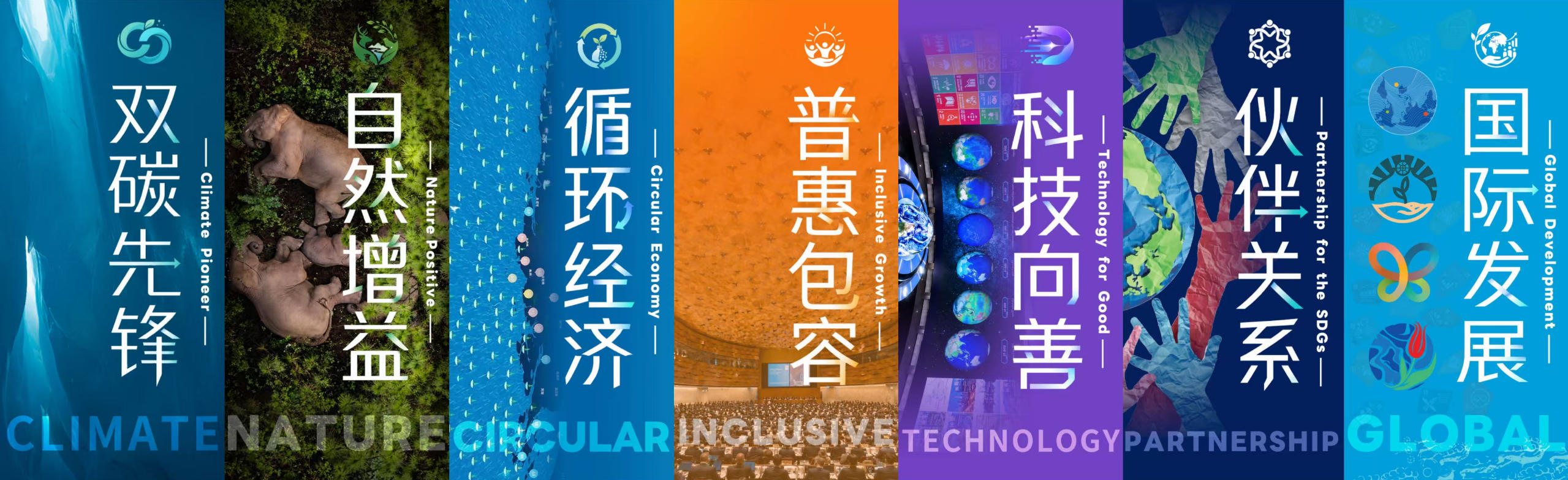
GoldenKey maps the 17 Sustainable Development Goals (SDGs) into seven categories: Carbon Pioneers, Nature Positive, Circular Economy, Inclusive Growth, Technology for Good, Partnerships for the SDGs, and Global Development.
The reason is straightforward: "sustainable development" is a big concept. Many companies have solid practices but struggle to articulate them—they've made real strides in green supply chains but can't tell if that belongs under "Carbon Pioneer" or "Partnerships"; they use AI for biodiversity conservation but aren't sure whether it's "Technology for Good" or "Nature Positive."
This framework is a "topic navigation system." Companies don't have to figure out "which SDG does my solution contribute to?"—they can find their place by following these seven signposts.
More importantly, each of these seven categories is aligned with the cutting edge of the times. Carbon Pioneer corresponds to the global net-zero wave, Nature Positive responds to the Kunming-Montreal Global Biodiversity Framework (GBF), Circular Economy tackles resource efficiency head-on, Technology for Good captures the ethical application of AI and digital technologies, and Partnerships for the SDGs address the need for cross-sector collaboration to solve systemic challenges... Align with these, and your solution becomes deeply embedded in both the UN SDGs and China's national development direction—with a stronger chance to stand out on the GoldenKey platform.
Below is a detailed breakdown of each category. Use it as a tool to map your current solutions and to chart a clearer course for your future sustainability actions. After reading, you'll know exactly where your solution belongs.
—— CARBON PIONEER ——
SDG Alignment: SDG 7, SDG 9, SDG 13
Overview: The climate-driven business revolution is accelerating from the periphery to the core, reshaping corporate strategy, capital allocation, and industrial landscapes. Companies are advancing their dual-carbon strategies with clean energy as a key pillar, cascading down to zero-carbon parks, communities, ports, enterprises, and retail outlets—not only driving tangible transformation but also unlocking new engines for economic growth. This category focuses on key challenges in this transition, seeking solutions that leverage core strengths to solve problems while opening new growth spaces. We encourage innovative solutions that cut costs, improve efficiency, expand market boundaries, and reshape competitive advantage while tackling climate challenges.
Priority Areas:
Transforming point-based breakthroughs into integrated effects; advancing zero-carbon entities (parks, factories, etc.)
Promoting clean energy development; building diversified green power consumption models
Connecting the dots to systematically advance green, low-carbon supply chain development
Driving data-enabled, low-carbon digital management upgrades
Scaling green/sustainable consumption for broader adoption
—— NATURE POSITIVE ——
SDG Alignment: SDG 6, SDG 12, SDG 14, SDG 15
Overview: Over one million species face extinction, and nearly half of the world's land is degraded, affecting roughly half of the global population. Regulators are strengthening corporate sustainability disclosure requirements, gradually incorporating nature-related risks and opportunities. Grounded in China's ecological conservation and Beautiful China Initiative, companies must proactively shift business activities from depleting nature to restoring it—from extracting resources to enhancing ecological value. This category invites solutions that reduce environmental footprints, restore ecosystems, and improve ecosystem health and resilience through business models, eco-friendly products, and commercial solutions. The goal is to integrate natural capital into long-term business strategy, achieving synergies between commercial and natural value, and advancing harmonious coexistence between humanity and nature.
Priority Areas:
Environmental protection and pollution control
Renewable energy and desertification prevention
Nature-based solutions (NbS)
Other effective area-based conservation measures (OECMs) beyond protected areas
—— CIRCULAR ECONOMY ——
SDG Alignment: SDG 8, SDG 12, SDG 13
Overview: The World Bank projects global municipal solid waste to reach 3.86 billion tons by 2050, yet only 21% is currently recycled. Developing a circular economy enhances both integrated waste management and resource supply security—a strategic choice for companies to strengthen supply chain resilience and build sustainable competitiveness. This category seeks outstanding solutions that transform waste into resources through design, technology, and business model innovation, shifting linear models to closed-loop systems, turning environmental burdens into growth drivers.
Priority Areas:
Realizing source reduction and eco-design: embedding resource efficiency and circular thinking from the product design stage
Developing remanufacturing, sharing, and leasing models; creating local green jobs
Building reverse recycling logistics systems to convert waste into high-value products
Enabling waste-to-resource utilization; R&D of bio-based and fully biodegradable materials
—— INCLUSIVE GROWTH ——
SDG Alignment: SDG 1, SDG 2, SDG 3, SDG 4, SDG 5, SDG 8, SDG 10, SDG 12
Overview: Inclusion and equality are core values of sustainable development, emphasizing that progress must benefit everyone and bridge gaps and inequalities. Guided by national strategies such as rural revitalization and addressing population aging, this category focuses on leveraging new technologies and approaches to empower sustainable rural development, improve equitable access to education, healthcare, and employment, and empower vulnerable groups. It advocates people-centered, inclusive governance and business models that promote multicultural coexistence and social harmony.
Priority Areas:
Promoting green rural industry development and rural energy transition; cultivating "new farmers", driving digital rural governance; preserving and revitalizing rural culture
Building barrier-free environments and bridging the digital divide
Advancing sustainability education and awareness at scale
Innovating in age-friendly solutions and services for emerging employment groups
Empowering women through technology
—— TECHNOLOGY FOR GOOD ——
SDG Alignment: SDG 7, SDG 9, SDG 10, SDG 13, SDG 15
Overview: Technological innovation in the digital age is never a solo performance by technology itself—it must respond to human needs and carry the warmth of development. The discussion on "technology for good" shouldn't stay at the frontier of innovation; it should root itself in the real needs of ordinary people and the defining challenges of our time. Technology is a critical force driving human progress and achieving the SDGs. Today, digital technologies like AI, big data, and the Internet of Things are core enablers for companies tackling sustainability challenges. This category upholds the value of technology for good—putting people first, and ensuring safety, fairness, inclusion, and compliance. We encourage companies to use responsible technological innovation to address social pain points, environmental challenges, and public needs, offering replicable and scalable Chinese solutions of technology for good to the world.
Priority Areas:
AI-driven industrial innovation and green transformation
Digital technologies that enable inclusive and equitable development
Digital technologies that empower environmental protection and climate action
Digital technologies that drive low-carbon energy system transformation
Responsible AI governance and technology ethics practices
—— PARTNERSHIPS FOR THE SDGS——
SDG Alignment: SDG 17 and beyond
Overview: Sustainability challenges are complex and interconnected—no single company working alone can achieve systemic breakthroughs. Partnerships for the SDGs are the core of SDG 17 and a critical pathway for China's sustainable development. Achieving development goals requires cross-chain, cross-sector, and cross-ecosystem collaboration. This category focuses on the responsibility of leading companies to serve as connectors—breaking down industry silos, bridging supply-demand gaps, and building diverse partnerships that bring together upstream and downstream supply chains, government, business, and civil society. Through institutionalized cooperation, networked coordination, and ecosystem-based co-creation, we aim to tackle shared challenges in green transition and equitable development, amplifying action value through "1+1>2" synergies and creating replicable governance models and cooperation ecosystems for critical areas like energy transition.
Priority Areas:
Green and low-carbon partnerships for collaborative emission reduction across the entire supply chain
Co-building green supply chains; creating responsible industrial chain ecosystems
Energy ecosystem partnerships to build multi-stakeholder energy transition communities
Cross-industry and cross-sector partnerships, exploring innovative sustainability solutions
SDG-oriented international partnership practices
—— GLOBAL DEVELOPMENT ——
SDG Alignment: SDG 1, SDG 2, SDG 8, SDG 9, SDG 10, SDG 11, SDG 12, SDG 13, SDG 14, SDG 15, SDG 17
Overview: Global development faces multiple challenges today, and many developing countries urgently need practical pathways to break through. This category places special emphasis on the demonstration effect of "small but beautiful" projects, highlighting solutions by Chinese companies that promote local development abroad, improve natural ecosystems, and enhance community well-being. We look for down-to-earth, easily scalable project models—not necessarily grand in scale, but precise in solving local development issues, and easy for other regions to adapt and replicate. By strengthening host countries' autonomous development capacity, these solutions demonstrate Chinese companies' commitment and practical wisdom in building a shared future for humanity.
Priority Areas:
Agricultural development and rural transformation
Green and resilient development
Digitalization and new industrialization
Cultural and creative economy

Scan to Register
2026 "GoldenKey – SDG Solutions"