
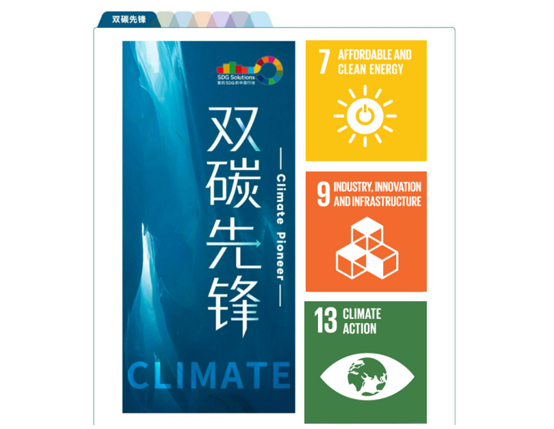
【Visual Identity】
Primary Color: Glacial Blue
This shade of blue appears calm but carries a trace of fragility. It is the undisturbed silence deep within the ice—and the fading vitality at the melting edge. It holds the glacier's sigh and the ocean's breath.
Visual Expression: A Melting Glacier
These ice formations are not static scenery, but a flowing, vanishing body of the Earth. The transparent fissures—like cracks on parched land—each refract a light that is the glacier's silent cry for help.
Image Story: Fox Glacier, New Zealand
A glacier is poetry frozen in time. But now, in ever-warming air, it blurs and shatters into fragments bearing cracks. When glacial melt becomes the norm, rising sea levels and extreme weather become warning letters we cannot refuse. If the 2°C threshold is breached, will this blue poetry all disappear?
What We Hope For:
When the Earth sends out alarms, corporate action is the most tender response. We look forward to seeing more Carbon Pioneers—using the power of innovation to press the "cooling button" for an overheating planet, and through solid action, cracking the challenges on the road to carbon peaking and neutrality. May every effort of these pioneers slow the pace of glacial melt, and let that clear blue linger on Earth a little longer.
Category Positioning
Carbon Pioneers is the engine of sustainable development.
The climate-driven business revolution is accelerating from the periphery to the core, reshaping corporate strategy, capital allocation, and industrial landscapes. By 2026, China's national carbon market has brought in more energy-intensive industries, and carbon pricing signals are gradually taking shape. The EU's Carbon Border Adjustment Mechanism (CBAM) has entered the substantive compliance phase following its transition period, imposing direct cost pressures on export-oriented companies. Meanwhile, the dual-carbon strategy—powered by clean energy development—has cascaded to zero-carbon parks, communities, ports, factories, and retail outlets, and has entered a phase of large-scale rollout. Since early 2026, the National Energy Administration and other agencies have continued to refine renewable energy and green electricity certificate policies, further supporting clean energy consumption and market-based trading. These developments are not only driving tangible corporate transformation but also unlocking green engines for new economic growth.
This category focuses on key challenges in this transition, seeking solutions that leverage core strengths to solve problems while opening new growth spaces. We encourage innovative solutions that cut costs, improve efficiency, expand market boundaries, and reshape competitive advantage while tackling climate challenges. We are especially interested in solutions that balance short-term investment with long-term returns and accommodate both large enterprises and smaller players with different resource endowments.
Priority Areas
What are we looking for this year?
For the "Carbon Pioneers" category under 2026 GoldenKey, we have identified the following five priority directions (not limited to these):
1. Transforming point-based breakthroughs into integrated effects and advancing the development of zero-carbon entities (parks, factories, etc.)
Moving beyond energy-saving or carbon-reduction at individual equipment or process levels, we target the boundaries of parks, factories, communities, and other entities—integrating energy, buildings, transportation, and waste treatment systems to achieve near-zero or net-zero overall carbon emissions. We look forward to solutions with a system-integration approach and measurable carbon reduction within defined boundaries, especially cases that have solved practical challenges such as multi-stakeholder coordination and multi-energy coupling.
2. Promoting clean energy development, and building diversified green power consumption models
This includes: corporate investment in or procurement of wind, solar, biomass, geothermal, and other renewables; exploration of zero-carbon energy applications like green hydrogen and green ammonia; participation in green power trading and signing long-term power purchase agreements (PPAs); deployment of distributed energy and storage systems; and purchase of green electricity certificates.
We focus on how companies design economically viable clean energy portfolios based on local resource endowments, load characteristics, and grid conditions.
3. Unblocking the barriers to systematically advance green, low-carbon supply chain development
Scope 3 emissions management is increasingly becoming a focus of regulatory and market attention. In practice, how core companies drive upstream SME suppliers to conduct carbon accounting and reduction is a key challenge. We are looking for approaches that may include: supplier carbon management platforms, low-cost carbon accounting tools, green procurement clauses, and pooled renewable energy procurement. We particularly welcome solutions that address the two major pain points of "data availability" and "supplier participation willingness."
4. Data-driven digital intelligence management upgrades for green and low-carbon operations
Real-time monitoring, prediction, and optimization of carbon emissions can be achieved by leveraging IoT, AI, and other technologies. 2026 marks the first year of mandatory ESG disclosure, with multiple exchanges requiring listed companies to disclose carbon emissions data according to standards—making data verifiability an essential requirement. We look for companies that have established digital carbon management platforms covering major emission sources, with data capable of third-party verification or regulatory system integration. We also welcome solutions that optimize energy efficiency and reduce redundant emissions through algorithmic approaches.
5. Scaling green/sustainable consumption for broader adoption
Targeting end consumers or corporate clients, this direction uses product carbon labeling, green points, trade-in programs, leasing/recycling models, and other mechanisms to incentivize low-carbon consumption choices. We look for cases that can quantify consumption-side emission reductions while remaining commercially sustainable—for example, data on increased sales share of low-carbon products at retailers, or green consumption incentive mechanism designs at platform companies.
Category-Specific Evaluation Criteria
How do we measure valuable action?
Applying the proven AMIVE evaluation framework (Accuracy, Match, Innovation, Value, and Evaluation), the "Carbon Pioneer" category will place special emphasis on the following three aspects:
1. Problem-Solving Journey > Results Presentation
The value of a solution lies not only in the final carbon reduction numbers, but in the complete path from challenge identification to solution implementation. What specific difficulties were encountered? What key decisions were made? Were there trial-and-error moments or course corrections, and what lessons were learned? This process information is often more valuable to peer companies than a polished summary of results.
2. Replicability + Return on Investment
Evaluation considers not only absolute carbon reduction volumes but also carbon reduction efficiency per unit of investment. Specific metrics include: total project investment (or operating cost increment), annual carbon reduction, and investment payback period. For resource-constrained SMEs, low-cost, high-leverage solutions are often more scalable than high-capital projects.
3. Data Credibility
Key figures such as carbon emission accounting and reduction calculations should have clearly defined boundaries, traceable sources, and sound calculation methodologies. If third-party verification has been obtained or data is automatically collected and stored via digital monitoring systems, please indicate this in your submission. Where third-party verification is not yet available, please explain the scope of data collection, estimation basis, and degree of uncertainty—avoid vague or overstated claims.
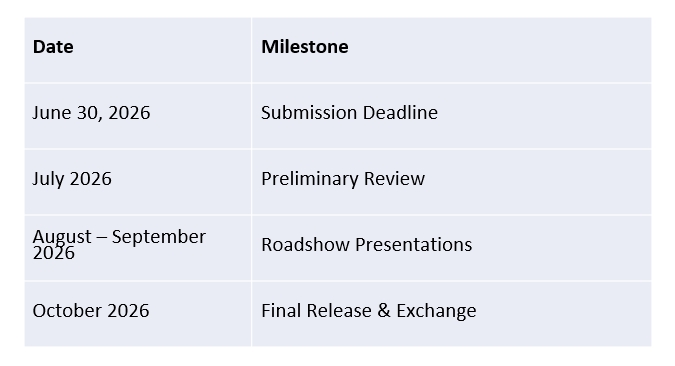
Timeline (Tentative)
Category Contact: Hu Wenjuan | +86 15120095307
Email: wenjuan.hu@wtoguide.net