
【Visual Identity】
Primary Color: Verdant Green with the Scent of Earth
This green is the breath of the forest, the texture of the land, and the gentle undertone of all life in symbiosis. It carries the moisture of soil and the fragrance of vegetation—nature in its most authentic form.
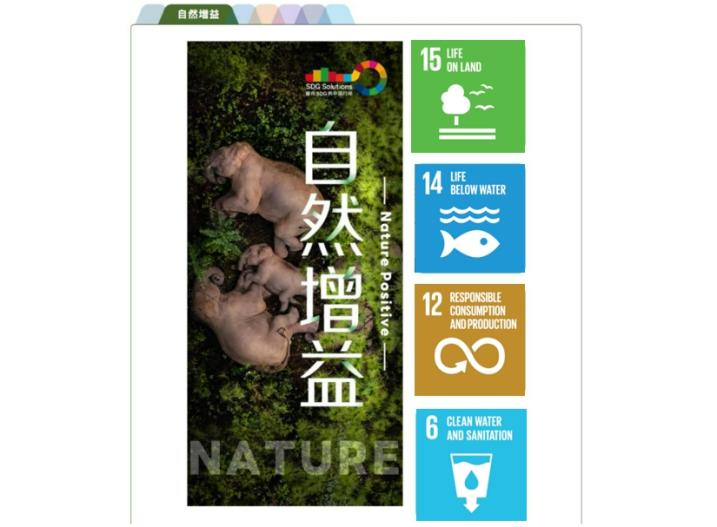
Visual Expression: Harmonious Coexistence Between Humans and Nature
In this image, elephants rest peacefully on the lush green earth, as if listening to the planet's heartbeat and breathing in rhythm with the grass and trees. This is not a distant fairy tale, but the most simple connection we were always meant to share with all living beings.
Image Story: Wild Asian Elephants' Northward Migration from Yunnan
Do you remember the herd of wild Asian elephants that journeyed north through Yunnan in 2021? With calves in tow, they traveled through towns and countryside—a gentle exodus that questioned the boundaries between us and nature. The human guardianship that accompanied their journey became the most beautiful expression of "All Beings Interconnected, All Life Flourishing."
What We Hope For
When a million species face extinction, and the planet's wounds lie bare, every corporate pivot becomes a gentle response to nature. We look forward to more forces shifting from extraction to restoration, from consumption to regeneration—turning the footsteps of business into the pulse of ecological recovery. May we share this green with all beings, and may every breath echo with the sound of forests and elephants.
Category Positioning
"Nature Positive" is a recalibration of the business–nature relationship.
A question of our time: Why do we urgently need a Nature Positive approach?
WWF research shows over one million species face extinction. UNCCD data reveals that nearly half of the world's land ecosystems are degraded, affecting the livelihoods of roughly half the global population. Intensified climate change, biodiversity loss, water and land resource scarcity, and declining ecosystem resilience have become core bottlenecks constraining human sustainable development.
China is advancing ecological conservation and the "Beautiful China" initiative. Meanwhile, the global regulatory framework continues to evolve. ISSB is accelerating the integration of nature-related risks and opportunities into corporate disclosure requirements.
In practice, companies have the opportunity to fundamentally reduce harm to nature. Through business model, technology, and management innovation, they can enable nature to continue benefiting and gaining value from interactions with human activity. We encourage companies to embed natural capital into long-term development strategies, achieving synergies between commercial and natural value, and contributing through concrete action to the harmonious coexistence of humanity and nature.
What GoldenKey looks for is not isolated environmental actions, but innovative solutions that can solve specific ecological challenges—practical actions that protect our shared planet.
Priority Areas
2026: Four Key Innovation Pathways
1. Eco-Friendly Practices and Systemic Restoration
Embed conservation principles throughout business processes—prevent pollution at source, repair damage at the endpoint. We are looking for closed-loop actions from source prevention to systemic restoration, ensuring that production and operations no longer harm nature, but continuously restore it.
Includes: Synergistic pollution and carbon reduction; solid waste resource utilization; soil and water conservation; integrated restoration of mountains, waters, forests, farmlands, grasslands, and deserts; contaminated site remediation; mine ecological restoration.
2. Clean Energy and Degraded Land Synergistic Governance
Use renewable energy to drive ecological restoration and industrial value addition. We look for innovative models that integrate ecological restoration, green energy, and livelihood improvement.
Includes: Photovoltaic desert control; solar panel power generation + under-panel farming/aquaculture; clean energy substitution; desertification/degraded land governance; integrated eco-industry development.
3. Nature-Based Solutions (NbS)
Leverage ecosystem services through protection, restoration, and sustainable management to address interconnected challenges such as climate change, biodiversity loss, water security, and food security. We seek low-cost, high-benefit, long-term operable systemic natural solutions.
Outstanding solutions can simultaneously provide livable environments, sustainable livelihoods, quality products, jobs, and community economic development—generating triple environmental, social, and economic benefits. Solutions that achieve commercial sustainability can be classified as nature-based commercial solutions.
4. Other Effective Area-Based Conservation Measures (OECMs)
Focus on areas that, while not designated as official nature reserves, achieve effective conservation through long-term management—a frontier issue in international conservation. We look for replicable models where corporate-owned spaces become conservation strongholds.
Typical sites: Oil and gas fields; restored mines; corporate campus green spaces; shelter forests; landscape water systems; ecological patches within production bases.
Practices include: On-site ecological quality enhancement; wildlife habitat optimization; native species protection; long-term monitoring and management; ecological corridor construction.
Category-Specific Evaluation Criteria
How to Achieve Harmonious Coexistence Between Humans and Nature
A strong Nature Positive action must answer these core questions:
1. Precise Identification of Challenges
What are the core conflicts between business and nature? What real harms do traditional models cause? What "natural and human-made threats" do specific ecosystems/species face? Use data to articulate the problem clearly.
2. Clear Innovation Breakthroughs
How to break free from "business-as-usual" path dependence? How to achieve the triple win of "ecological protection + business development + social value"? Identify the core breakthroughs in technology, models, and mechanisms.
3. Sustainable with Closed-Loop Assurance
How to avoid "high input, unsustainable, unprofitable" outcomes? How to establish new value accounting and revenue mechanisms? Achieve a virtuous cycle between environmental and commercial value that self-sustains over the long term.
4. Replicable, Scalable, and Transferable
Ecological solutions should consider scale effects. Explain whether the model is standardized, whether it can be replicated across regions/industries, and whether it offers a general solution to similar problems.
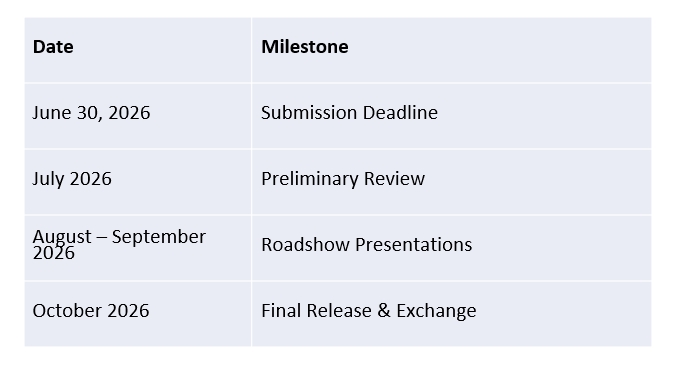
Timeline (Tentative)
Category Contact: Deng Mingwen | +86 13381109133
Email: tay314@qq.com